


Case Center

Becoming a world-leading software product and solution provider

Qualcomm Plasma Equipment RFID Tooling Error-Proofing System

Built on RockPlus EAM and RFID technology, the system delivers automatic Tooling identification, changeover verification and equipment-start interlocking for Plasma equipment — upgrading manual error-checking to equipment-level forced error-proofing.

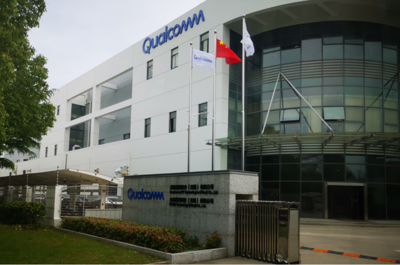
Qualcomm RF Technology (Wuxi) Co., Ltd. is an enterprise focused on the R&D, production and manufacturing of high-performance RF (radio frequency) technology, with a production floor involving a wide range of high-precision manufacturing equipment and complex process flows.

In the customer's JigSaw-related production lines and project scenarios, Plasma equipment must change the corresponding Tooling fixtures according to different product models and production programs. As product models and production changeovers become more frequent, the traditional reliance on operators to manually identify and verify Tooling creates risks of mis-installation, missed installation and model mismatch.

To address this, Hegong Software built an RFID Tooling error-proofing system for the Plasma equipment on the basis of the RockPlus EAM (Enterprise Asset Management) platform, combining automatic RFID identification, high-temperature and anti-metal RFID tags, industrial control boxes and equipment signal interlocking — upgrading the process from "manually confirming Tooling" to "automatic RFID identification + systematic automatic verification + enforced error-proofing on the Plasma equipment".

Project Overview

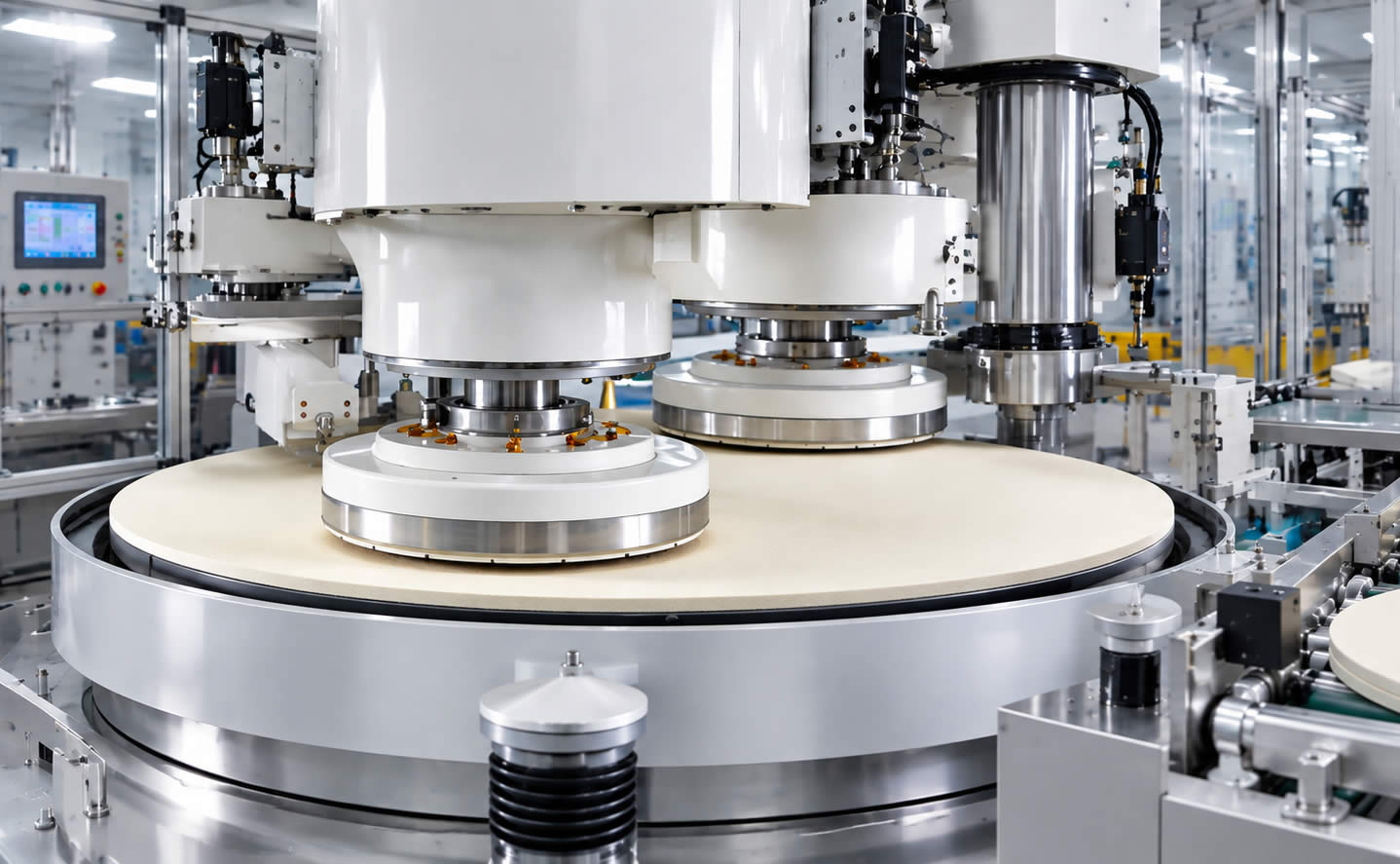
Plasma is a key process equipment in this production environment. When switching products, the equipment must simultaneously replace several Tooling fixtures inside it; different products, programs and mounting positions correspond to different Tooling.

Previously, changeovers relied mainly on operators preparing Tooling according to the current product model and completing installation and confirmation manually. Because some fixtures look very similar, relying only on personnel experience and checklists cannot mechanistically eliminate picking the wrong fixture, installing it in the wrong position, or model mismatch.

This project deployed the RFID Tooling identification and error-proofing system across 5 Plasma machines on site. The system establishes a unique RFID identity for each Tooling fixture; RFID antennas inside the equipment automatically read the currently installed Tooling, and RockPlus EAM automatically compares each reading against the current product, equipment program and fixture mounting position.

The project also upgraded the control circuit of the Plasma equipment: an industrial control box was wired into the equipment start/stop control signal, directly interlocking the RFID verification result with the equipment start condition.

The Plasma equipment is allowed to start only after the Tooling at every specified position has been identified and verified correct. If any Tooling is not detected, mismatches the model, or is installed in the wrong position, the system locks the equipment start signal and production cannot proceed.

This forms the forced error-proofing closed loop:

Select product/program → RFID automatically identifies Tooling → position-by-position system verification → alarm and Plasma equipment lock on any mismatch → all matched → equipment lock released → Plasma equipment starts production

Key Issues

1. Plasma changeovers involve multiple fixtures; manual verification carries mis-installation risk

When a Plasma machine switches between products, several Tooling fixtures inside the equipment must be replaced.

Under the traditional model, operators had to find the matching Tooling for the current product, swap the whole set, and confirm it manually. As the number of product models and changeover frequency grew, manual searching, judgement and confirmation not only hurt changeover efficiency but could not fully prevent wrong Tooling, wrong mounting positions or model mismatch.

This is especially true for fixtures of near-identical appearance: visual inspection and personal experience alone cannot establish a stable, repeatable error-proofing mechanism.

The core problem to solve was therefore not simply "reminding operators to check the Tooling", but enabling the system to automatically identify which Tooling is installed in the Plasma equipment and automatically determine whether they meet the requirements of the current product and program.

2. High temperature and metal inside the Plasma equipment make conventional RFID tags unreliable

A key technical difficulty of this RFID deployment is that the interior of Plasma equipment is far from a typical RFID environment.

Inside the equipment there is a working temperature of roughly 80 °C. Ordinary RFID tags — in material, encapsulation and long-term stability — could be compromised by sustained heat, so tags suitable for the actual environment had to be used: high-temperature-resistant RFID tags.

At the same time, the Tooling fixtures used by Plasma equipment are metallic, with metal mounting surfaces. When ordinary RFID tags are applied directly to metal, RF performance is easily disturbed, degrading read range and identification stability.

For this specific environment the project adopted high-temperature, anti-metal RFID tags, with targeted design of tag placement and antenna layout based on the internal space of the Plasma equipment, the Tooling structure, the fixture mounting positions and the reading range of the RFID antennas.

What the project solved was not merely "attaching an RFID tag to a fixture", but the engineering challenge of stable RFID operation under:

~80 °C high temperature + metal fixtures + confined equipment interior + simultaneous identification of multiple fixtures.

3. Software alarms alone cannot fully prevent mistakes — equipment-level forced error-proofing is required

Conventional error-proofing typically pops up an alarm and asks the operator to re-check.

That approach still depends on human compliance. Even when the system detects wrong Tooling, if the Plasma equipment can still be started, an operator may ignore the prompt or proceed after a mis-operation.

This project therefore did not stop at "identification" and "alarms"; it went further to modify the control circuit of the Plasma equipment, interlocking the RFID verification result directly with the equipment start/stop control.

The system must not only "find Tooling errors" — it must guarantee:

If the Tooling does not match, the Plasma equipment cannot be started.

In this way, traditional software reminders were upgraded into forced error-proofing at the equipment control level.

4. Changeover and exception processes must be recorded automatically to achieve full Tooling traceability

Under manual management, product changeovers, fixture installation, exception alarms and operator information relied on manual confirmation and record-keeping.

When a quality issue later arises and it is necessary to confirm which set of Tooling was used in a given period, on which Plasma machine, changed over by whom, and whether any exception occurred during the changeover, manual tracing is slow and inefficient.

The project therefore also established a digital ledger and usage history for Plasma equipment and Tooling fixtures, unifying RFID identification, error-proofing verification, equipment status and operator actions into systematic records that support quality traceability and exception analysis.

Solution

Based on the RockPlus EAM (Enterprise Asset Management) platform, Hegong Software established an integrated Tooling error-proofing system for the Plasma equipment built on automatic RFID identification + fixture rule verification + control-box signal interlocking + audible/visual alarms + data traceability.

1. RockPlus EAM as the digital management base for Plasma Tooling

The project first established, in RockPlus EAM, the correspondence among products, production programs, Plasma equipment and Tooling fixtures.

The system maintains each fixture's identity, RFID tag number, applicable products and mounting positions, giving every physical Tooling a unique digital identity.

When an operator performs a changeover, the system automatically generates the Tooling list and position requirements for that changeover according to the selected product model and production program.

This creates a digital linkage of:

Product → Production program → Plasma equipment → Fixture position → Tooling identity → RFID EPC

which provides the reference basis for automatic identification and forced error-proofing.

2. Automatic RFID identification with dual "identity + position" verification

Each Plasma Tooling fixture carries a unique RFID tag; an RFID reader with multiple antennas is deployed inside the equipment.

The system automatically reads the EPC of every fixture currently installed through the RFID antennas and sends the readings in real time to RockPlus EAM, which compares them position by position against the standard Tooling list defined for the current product.

The system automatically determines whether the installed fixture is correct, applicable to the current product, and mounted at its specified position.

Verification results are maintained as Pending / Passed / Failed states. The moment a wrong fixture, a fixture belonging to another product, or an unknown RFID tag is read, the system immediately judges an exception and raises an alarm — no more item-by-item visual checking by operators.

3. High-temperature, anti-metal RFID tags break through the Plasma environment challenge

For the ~80 °C internal environment and the metallic nature of the Tooling fixtures, the project adopted high-temperature-resistant, anti-metal RFID tags suited to the actual conditions.

The high-temperature rating ensures the tags survive the Plasma equipment's internal heat; the anti-metal design reduces the impact of metal fixtures and mounting surfaces on RF performance.

Combined with the actual mounting positions of each Tooling inside the Plasma equipment, the RFID antennas were deployed in a targeted layout, using multi-antenna polling to automatically inventory and identify fixtures across multiple positions.

Through the combined design of tag selection, tag installation, antenna layout and software identification strategy, the project achieved stable RFID deployment inside a hot, metallic Plasma equipment environment.

4. Control-box integration into Plasma start/stop — equipment-level forced error-proofing

This is the core that distinguishes the project from ordinary RFID asset-identification projects.

Hegong Software modified and upgraded the Plasma equipment: an industrial control box was connected to the equipment's start/stop control signal, translating RockPlus EAM's RFID verification result directly into a condition governing whether the Plasma equipment may start.

Once a changeover begins, the system first locks the Plasma equipment's start signal; the RFID system then reads the Tooling at each position and verifies them one by one:

Tooling not detected → Plasma equipment stays locked

Tooling model mismatch → Plasma equipment stays locked and an alarm is raised

Tooling installed in the wrong position → Plasma equipment stays locked and an alarm is raised

All Tooling verified → equipment lock released automatically → Plasma equipment may start

In other words, the mechanism no longer stops at a "pop-up reminder".

Even if an operator installs the wrong fixture, as long as the RFID verification has not fully passed, the Plasma equipment simply cannot be started — wrong states are blocked from production at the equipment control logic level, achieving genuine forced error-proofing (Poka-Yoke).

5. Audible/visual alarms plus role permissions close the exception-handling loop

The project also linked equipment control with on-site audible/visual alarms.

While any Tooling is in the Pending state, the Plasma equipment stays locked; when a fixture error is found, the system triggers the exception alarm and indicates the specific failing position on the operator terminal, helping the operator localize the problem quickly.

When all fixtures pass verification, the system releases the Plasma equipment start lock and returns to the normal state.

Role permissions further constrain the exception process: an ordinary Operator performs routine changeovers only; unlocking under exceptional conditions requires Engineer privileges, preventing operators from casually bypassing the error-proofing mechanism.

6. Full changeover records provide complete Tooling traceability

RockPlus EAM automatically records the whole Plasma changeover process, including product model, production program, equipment, Tooling identity, RFID tag, mounting position, verification result, read time, operator and exception-alarm details.

When a later production or quality exception occurs, historical usage can be queried quickly by product, equipment, time and fixture.

The final closed digital loop:

Fixture identity identifiable → installation verifiable → errors interceptable → Plasma start interlocked → changeover recordable → exceptions traceable

Benefit Analysis

1. Automatic Tooling error-proofing for Plasma equipment

RFID identification replaces item-by-item manual checking; the system automatically determines whether fixture models and mounting positions meet current product requirements, cutting the risk of human mis-judgement.

2. From "alarms and reminders" to "forced equipment-level error-proofing"

The industrial control box interlocks the Plasma equipment's start/stop control directly; with any fixture undetected, mismatched or wrongly installed, the equipment cannot be started — errors are blocked at the control level before entering production.

3. Breakthrough on RFID use under high temperature and metal

High-temperature, anti-metal RFID tags plus targeted antenna deployment make RFID work reliably inside the ~80 °C metallic environment of the Plasma equipment.

4. Faster Plasma changeovers

Automatic RFID reading and position-by-position comparison of multiple Tooling reduce manual searching, checking and form-filling.

5. A complete Tooling usage history

Products, equipment, Tooling, RFID, positions, times, personnel and alarms are recorded automatically, providing fast traceability for production exceptions and quality issues.

6. Closed-loop management of equipment, fixtures and people

RockPlus EAM unifies Plasma equipment management, Tooling management, RFID identification, permission control and equipment interlocking — turning single-point fixture identification into a complete equipment-management closed loop.

7. A replicable RFID fixture error-proofing solution

The pattern of "RockPlus EAM + RFID + high-temperature anti-metal tags + industrial control box + equipment signal interlocking" can be extended to jigs, fixtures, molds, cutting tools and carriers across semiconductor and precision-manufacturing error-proofing scenarios.

Related Cases

Phone

400 008 0655

Live Chat

Downloads

WeChat

Copyright © 2019-2026 Shanghai Hegong Software Co., Ltd. Shanghai Public Security No. 31011502014114 Shanghai ICP No. 19036824-1

  • Live Chat
  • Call
  • Back to Top